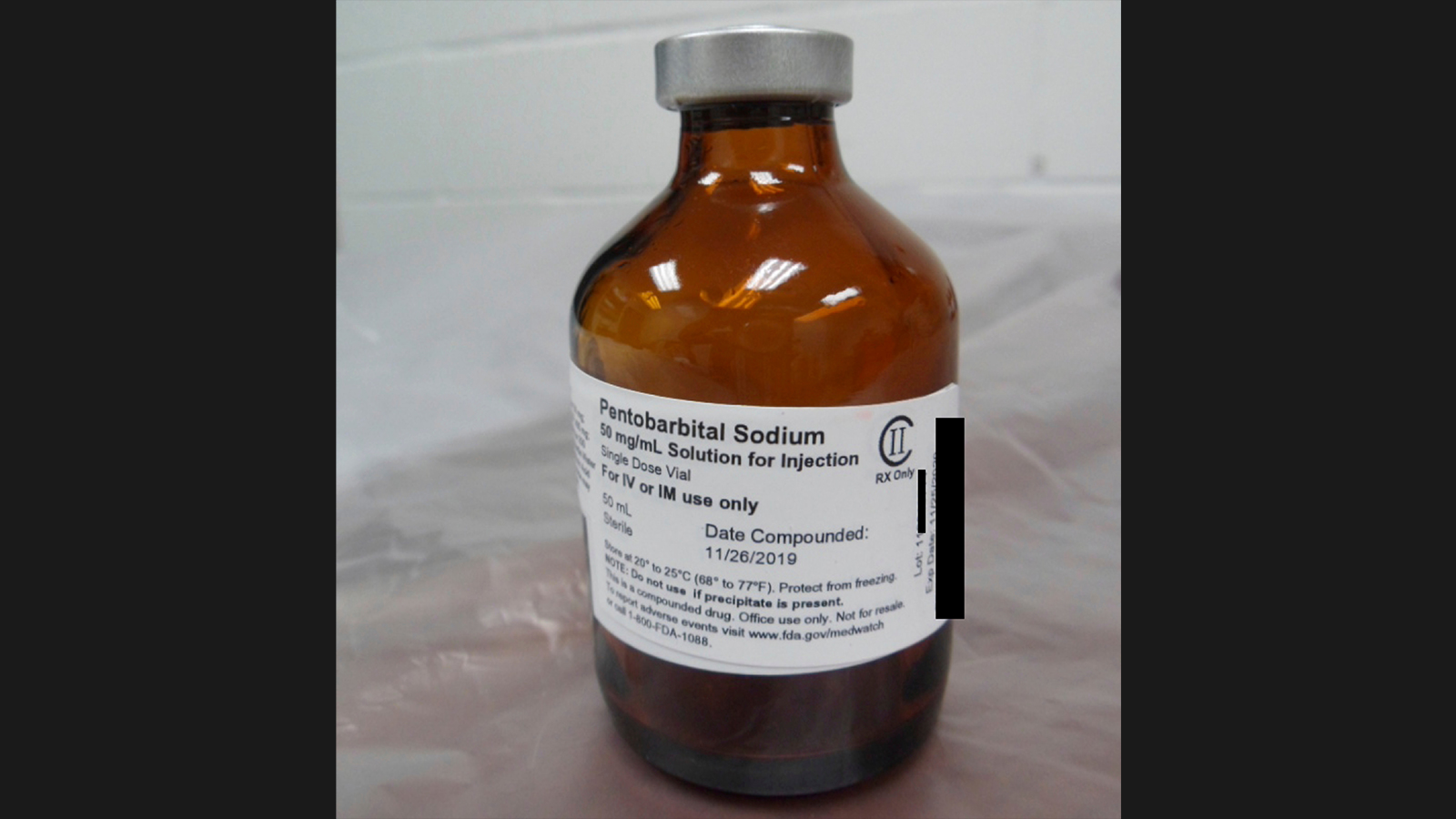
The lethal drug utilized in Tennessee’s unsuccessful execution of Christa Pike has been employed in multiple states and by the U.S. government. Pentobarbital, a barbiturate, is used for sedation, insomnia treatment, anesthesia preparation, and seizure control, as well as veterinary euthanasia. In overdose, it can produce coma, suppress breathing, and cause circulatory collapse.
For years, lethal injections commonly used a three-drug mix, but restrictions led to the adoption of pentobarbital at the federal level during President Trump’s first term. This protocol involves administering a 5-g dose of pentobarbital, a fraction of a gram in medical settings. The federal government conducted 13 executions using pentobarbital between 2020 and 2021.
Guidelines vary across states; Georgia and Texas administer a second dose if the first is unsuccessful, while South Carolina provides two 5-g doses spaced 10 minutes apart. Concerns have been raised regarding the potential for pulmonary edema and unnecessary pain and suffering, leading to recommendations for humane treatment. When past lethal injection executions have gone wrong, it is usually because an IV line cannot be properly inserted. Witnesses to pentobarbital executions frequently report that inmates stop breathing and become still less than a minute after getting the drug.”} 5g