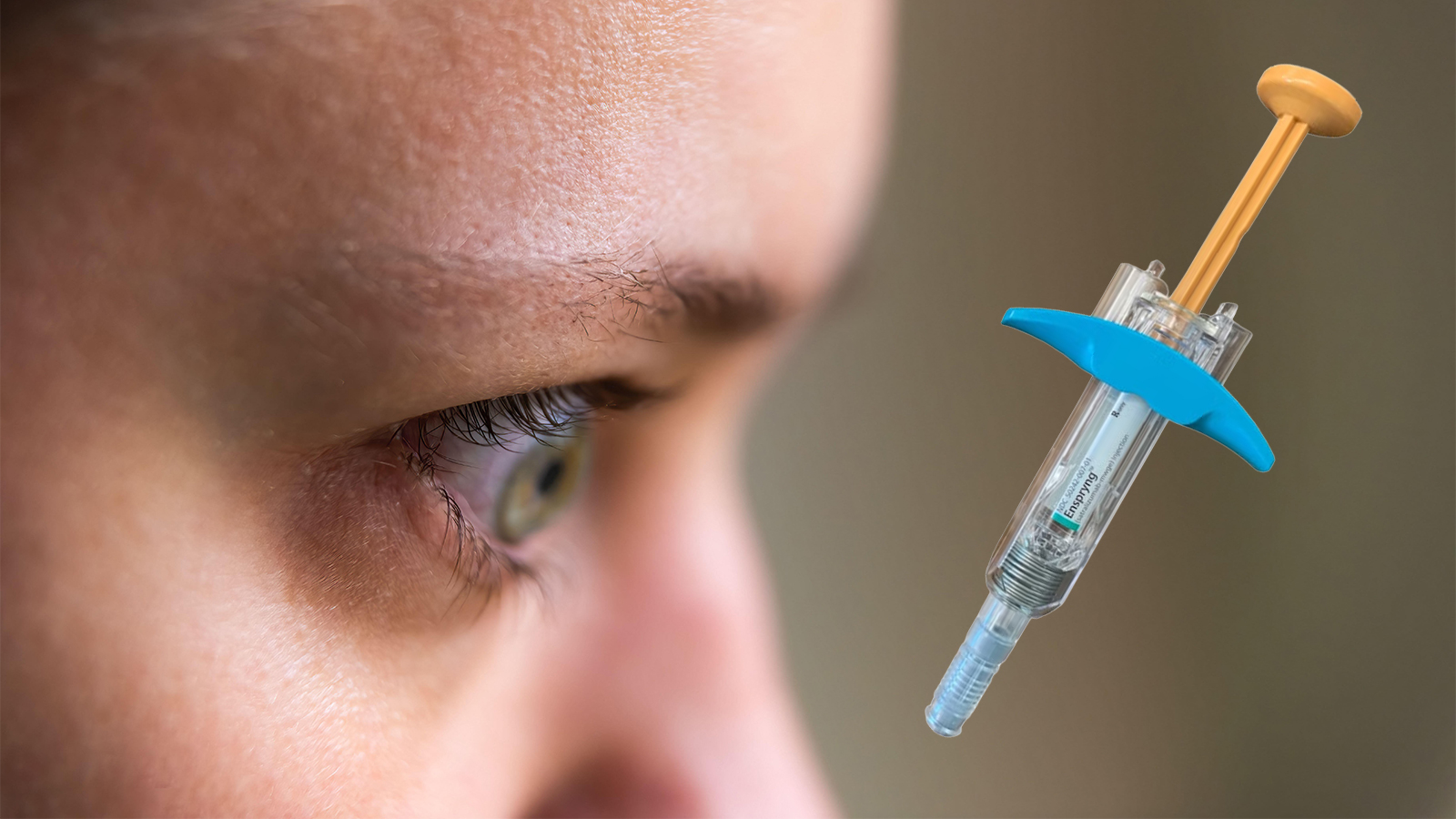
The FDA has approved satralizumab, the first at-home subcutaneous treatment for adults with thyroid eye disease (TED). This humanized monoclonal antibody targets interleukin (IL)-6 receptors, inhibiting IL-6-mediated signaling.
Data from the phase III SatraGO-1 and SatraGO-2 studies, involving 258 patients across 19 countries, demonstrated a reduction in proptosis and diplopia in the satralizumab group compared to placebo. Results were consistent across the trial population, including patients with active and chronic TED.
The availability of this subcutaneous option offers greater flexibility for patients and physicians. Satralizumab’s safety profile is consistent with its profile for neuromyelitis optica spectrum disorder. Common adverse events included upper respiratory tract infections and increased alanine aminotransferase levels. Contraindications include active or untreated latent tuberculosis and active hepatitis B infection. Screening for hepatitis B, tuberculosis, and liver transaminase is required before treatment. The drug is administered via subcutaneous injection, initially at weeks 0, 2, and 4, followed by maintenance injections every 4 weeks. Additional studies are ongoing for other neurologic, autoimmune, and inflammatory diseases.