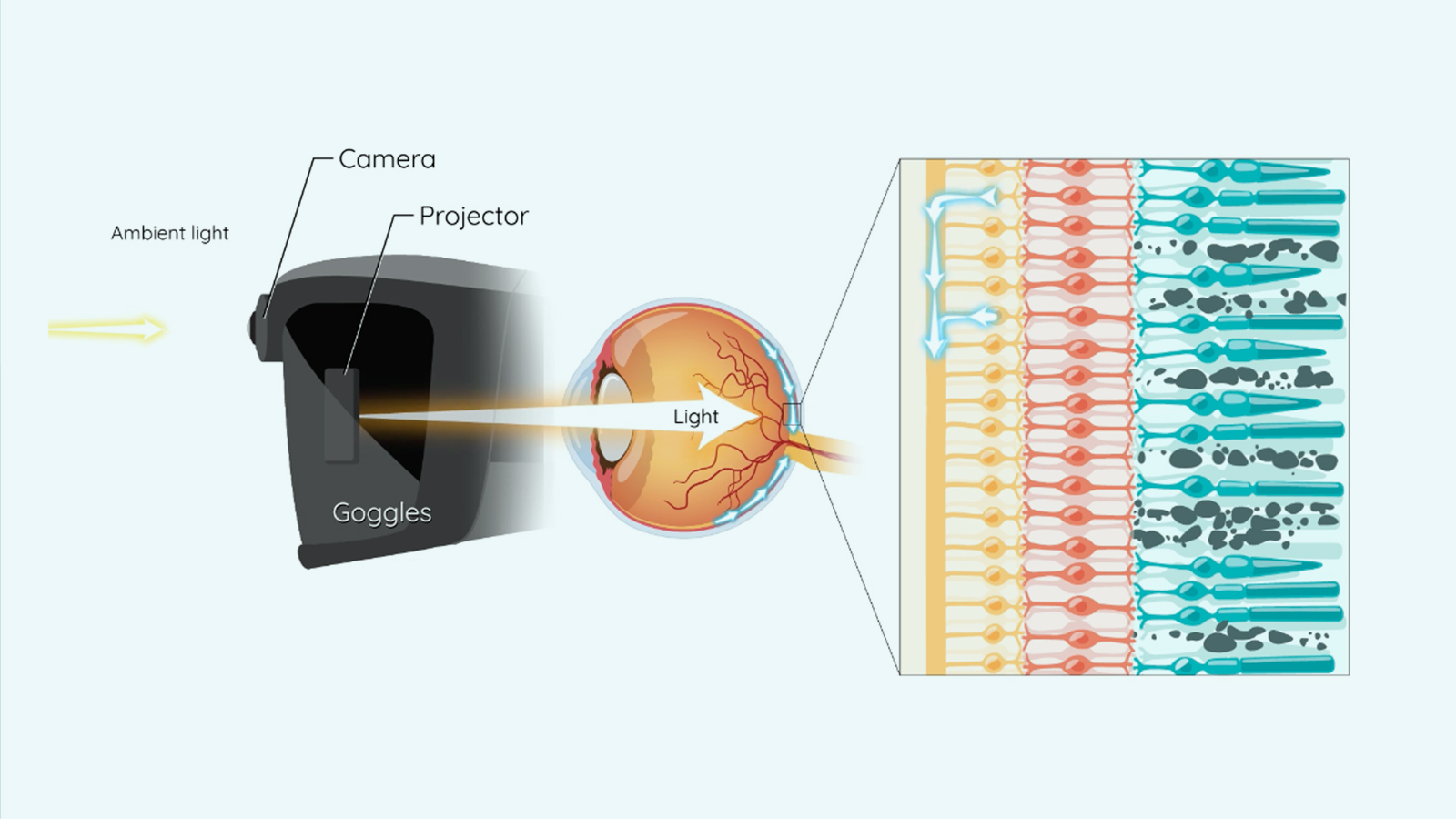
A small preliminary trial demonstrated early promise in a treatment for advanced retinitis pigmentosa (RP) utilizing genetically engineered genes. Seven of ten patients experienced increased light sensitivity following optogenetic treatment, aided by light-stimulating goggles. The improvement was clinically meaningful in six cases. AE were common, with 34 documented events occurring in nine patients, including one severe AE characterized by transient occlusion of the central retinal artery.
Systemic adverse events also occurred, with 70 documented instances, categorized as mild, moderate, or severe. The treatment involved a single intravitreal injection and the use of specialized goggles projecting light patterns to activate FST in retinal ganglion cells. Investigators previously reported positive results from the first patient treated with optogenetic therapy. The current study included ten patients with profound visual impairment in both eyes from RP, meeting criteria for legal blindness. The primary endpoint was safety, and the key secondary endpoint was change in light sensitivity measured by full-field stimulus threshold (FST) testing. Clinically meaningful improvement in FST was defined as a decrease of at least 0.6 log units. Seven patients showed an improvement in light sensitivity, increasing by a factor of 2.0 to 62.3 from baseline. Three patients showed no change or a decrease in light sensitivity. Four patients performed better with the goggles and were subjectively considered as having a response.
RP encompasses more than 100 different types of defects. Optogenetics offers an agnostic treatment applicable across these defects, aiming to induce light sensitivity in cells that are normally not light sensitive. One patient withdrew from the study 6 months after injection, and a second patient withdrew after 2.5 years of follow-up. Four patients completed the planned 5 years of follow-up, and the remaining four had completed 2 to 4.5 years of follow-up at data analysis. Investigators evaluated visual performance in the treated eye with and without the goggles and with a patch over the untreated eye.